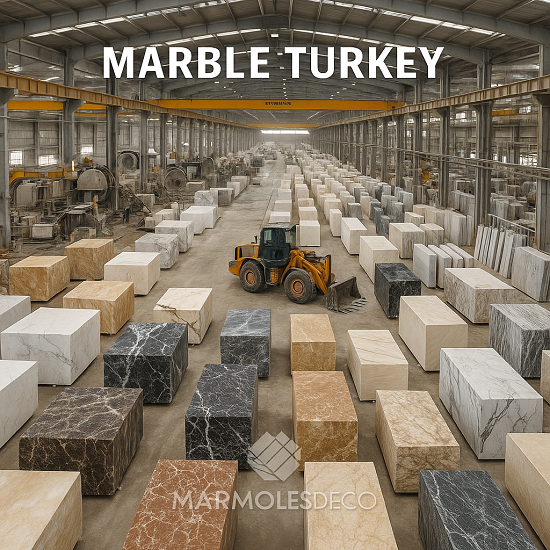
The story of natural stone in architecture is not only a story of materials, but of origins, landscapes, and the hands that shape them. In Türkiye, this relationship runs deep. The country holds geological formations that have taken millions of years to develop, shaping a heritage that blends nature and artisan knowledge. In this tradition, the role of a turkish marble manufacturer is not simply industrial—it is cultural, almost ancestral. Every block selected from the quarry reflects a dialogue between environment and craft. A trusted turkish marble producer does more than supply stone; they translate geological history into architectural language.
The world’s most respected architectural projects—from luxury residences to boutique hotels, cultural museums, and landscaped villas—draw from the craftsmanship found in Türkiye. The global attention is not accidental. It comes from consistency, material quality, and refined finishing techniques that have evolved through generations.
Travertine Textures That Shape Atmosphere
Among the most expressive stones found in Türkiye is turkish silver travertine. Known for its unique mineral layering and naturally cool tonal gradients, turkish silver travertine is favored by designers seeking a contemporary but organic visual character. Its subtle horizontal patterns make it suitable for both interior surfaces and exterior architectural elements. When used in large panel applications, turkish silver travertine creates a sense of refined calmness—never overwhelming, always balanced.
Another material that offers a remarkable design presence is turkish vein cut travertine. Unlike cross-cut surfaces, turkish vein cut travertine reveals the stone’s internal linear structure. The result is a rhythmic visual movement, like a soft horizon line repeating across a wall or floor. This makes turkish vein cut travertine a powerful architectural tool—it can elongate, direct, or guide spatial perception. Many designers use it to create spa environments, feature walls, or outdoor terraces with meditative atmosphere.
Together, turkish silver travertine and turkish vein cut travertine form a natural design language rooted in texture, warmth, and timelessness. Their patterns are never artificial, never repetitive—each slab is singular, shaped by nature’s own slow movement.
The Radiance and Depth of Onyx
When the intention is to create a focal point, few stones rival the striking presence of onyx marble. Known for its translucency, onyx marble can be backlit to reveal layered colors like flowing rivers of light. Depending on the variety, it may glow in tones of amber, pearl, honey, jade, or ivory. In luxury lounges, fine dining spaces, executive suites, and private spas, onyx marble creates an emotional impression. It suggests depth, fluidity, and quiet magnificence. No two pieces of onyx marble are ever the same; each is a geological artwork.
To shape onyx marble correctly requires patience and delicate handling. This is where the role of the expert turkish marble manufacturer becomes essential. Precision in cutting, edging, and finishing ensures that the natural qualities of the stone are preserved rather than diminished. A skilled turkish marble producer understands the importance of structural integrity, clarity of surface, and light transmission in each slab.
Material as Experience
The stones discussed here are not merely construction elements. They influence emotional perception. A room lined with turkish silver travertine may feel cool, calm, and grounded. A hall surfaced in turkish vein cut travertine may convey fluid movement and spatial direction. A feature wall made of onyx marble may become the silent centerpiece of an interior, a visual anchor that changes with the light throughout the day.
But the final experience ultimately depends on expertise. Stone chooses its own path unless guided with knowledge.
This is why selecting the right turkish marble manufacturer and working with a reliable turkish marble producer matters as much as choosing the stone itself.